Indigenous Carbon Knowledge Centre
Canada's Indigenous Carbon Resource Library
Government policy. Carbon markets. Indigenous stewardship. Conservation finance. Real-world projects. Plain-language resources created for Nations.
Government Resources
The Government of Canada's Greenhouse Gas Offset Toolkit, summarized title by title.
 18 pages
Carbon Markets 101
What Carbon Markets Mean for Indigenous Nations
The foundation. Greenhouse gases and why they get measured, how compliance and voluntary markets work, what one carbon credit represents, which projects can generate credits, and what makes one credit worth more than another. Every concept ends with what it means for a Nation and its territory.
 18 pages
Greenhouse Gas Offset Projects
How Offset Projects Create Environmental and Economic Value for Indigenous Nations
The next step after the basics. What an offset project actually is, the eight project types government recognizes, the six principles every credible project must satisfy, and what decides whether a project qualifies in the first place.
 18 pages
Benefits of Offset Projects
What Offset Projects Can Mean for a Nation, Its People and Its Territory
Beyond the credits. The three families of benefit government recognizes, economic, environmental and social, what each looks like on the ground, and an honest page on why none of them are automatic.
 18 pages
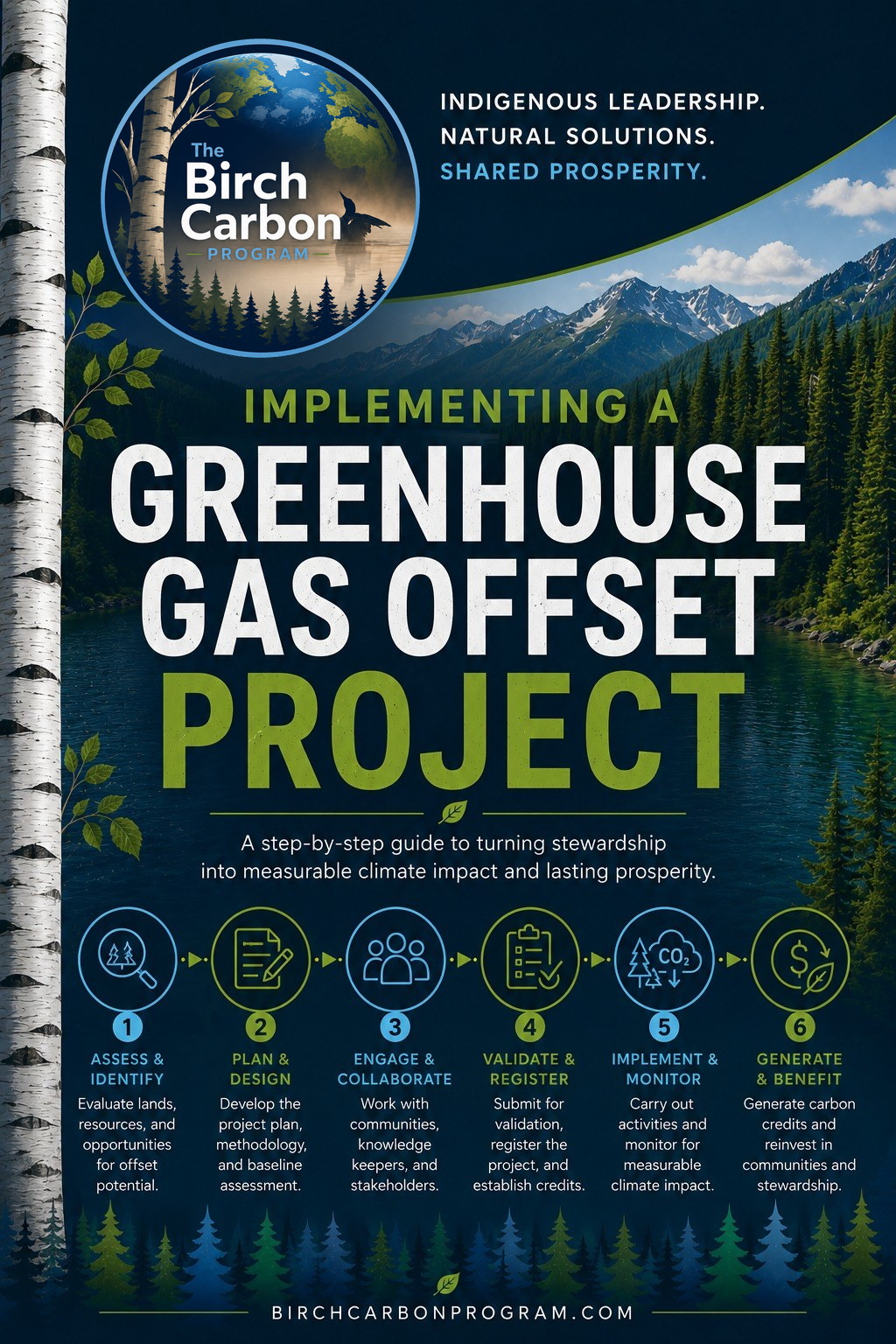
Implementing a Project
Understanding the Journey from Project Planning to Carbon Credit Generation
The whole road, in nine stages. Choosing a carbon system, planning, validation, registration, measuring carbon, managing risk, monitoring, verification, and finally selling the credits.
 18 pages
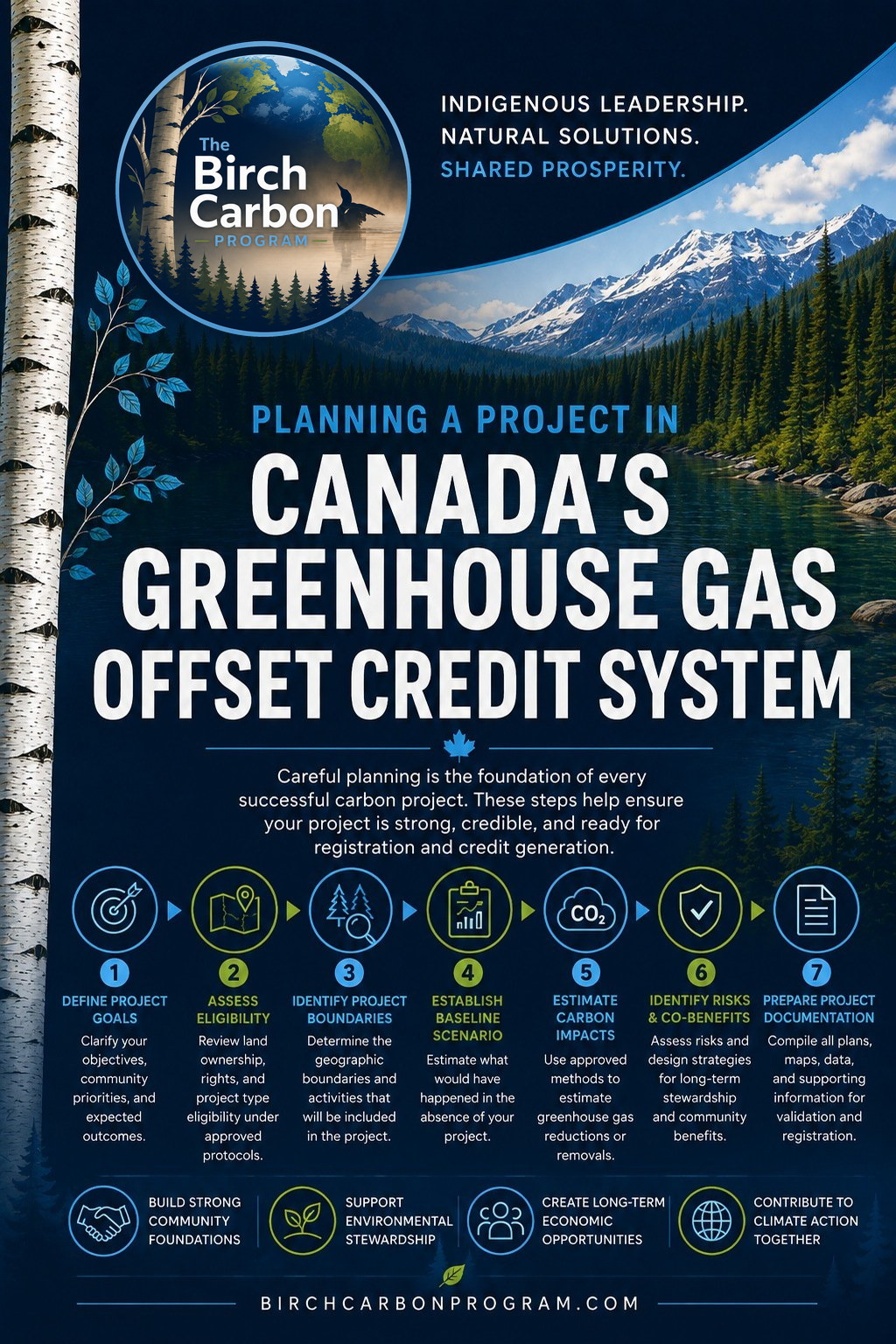
Planning a Project
Understanding the Foundations of a Successful Carbon Project
The questions to answer before anything is signed. Eligibility, what it costs and when, how revenue really arrives, who stewards the land long term, and how to build the right team around it.
Carbon Markets
The federal system and the provincial markets, and how a tonne becomes a credit in each.
 18 pages
Canada's Greenhouse Gas Offset System
The Federal Framework for Offset Credits
The national framework under the Greenhouse Gas Pollution Pricing Act. Every credit must be real, additional, quantifiable, independently verified, unique and permanent. Those six words explain the whole system.
 18 pages
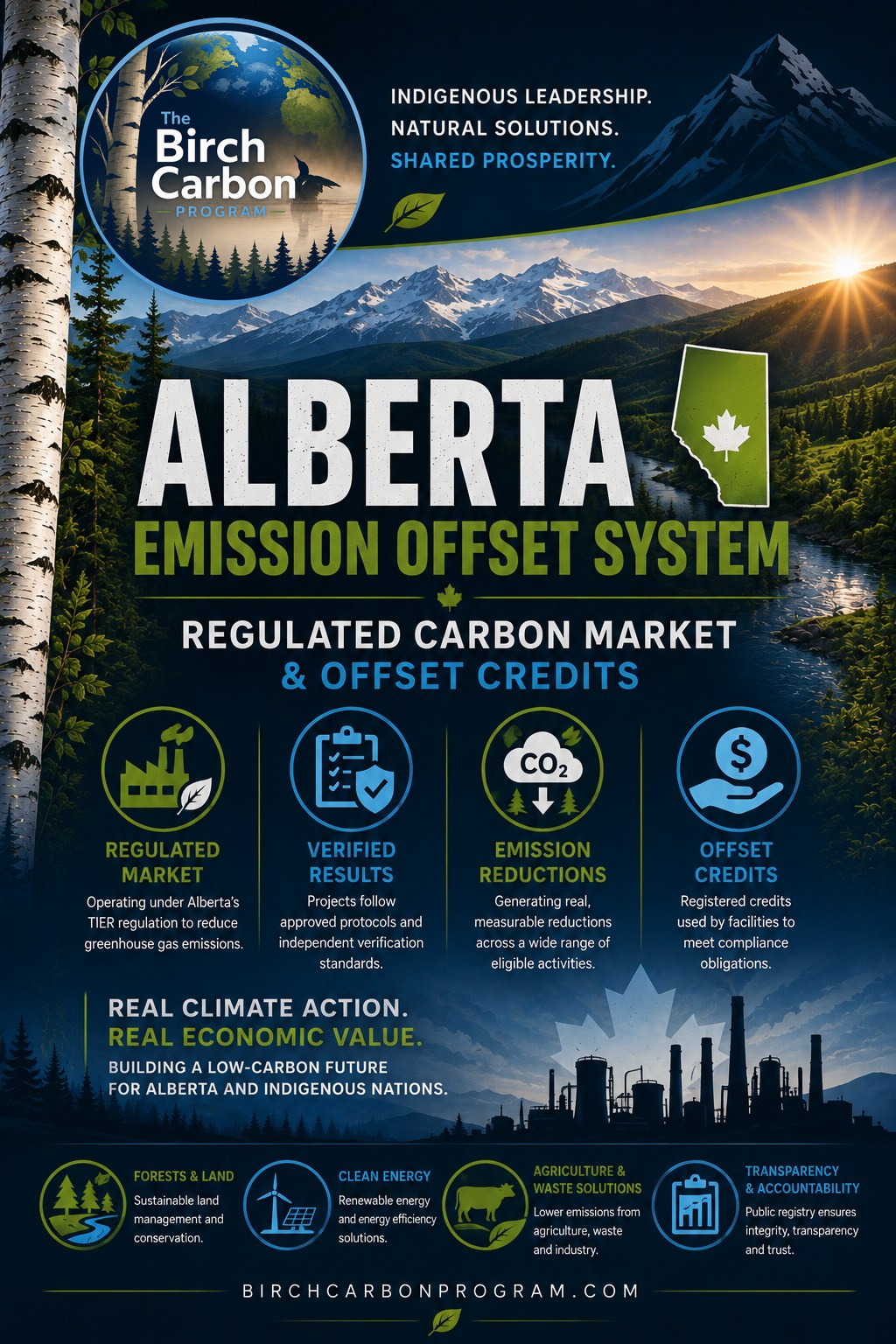
Alberta Emission Offset System
Regulated Carbon Market & Offset Credits
Canada's largest and longest-running regulated carbon market, operating since 2007. This summary walks the path from eligible project to registered credit, and flags that Alberta's forest harvest protocol is currently withdrawn.
 18 pages
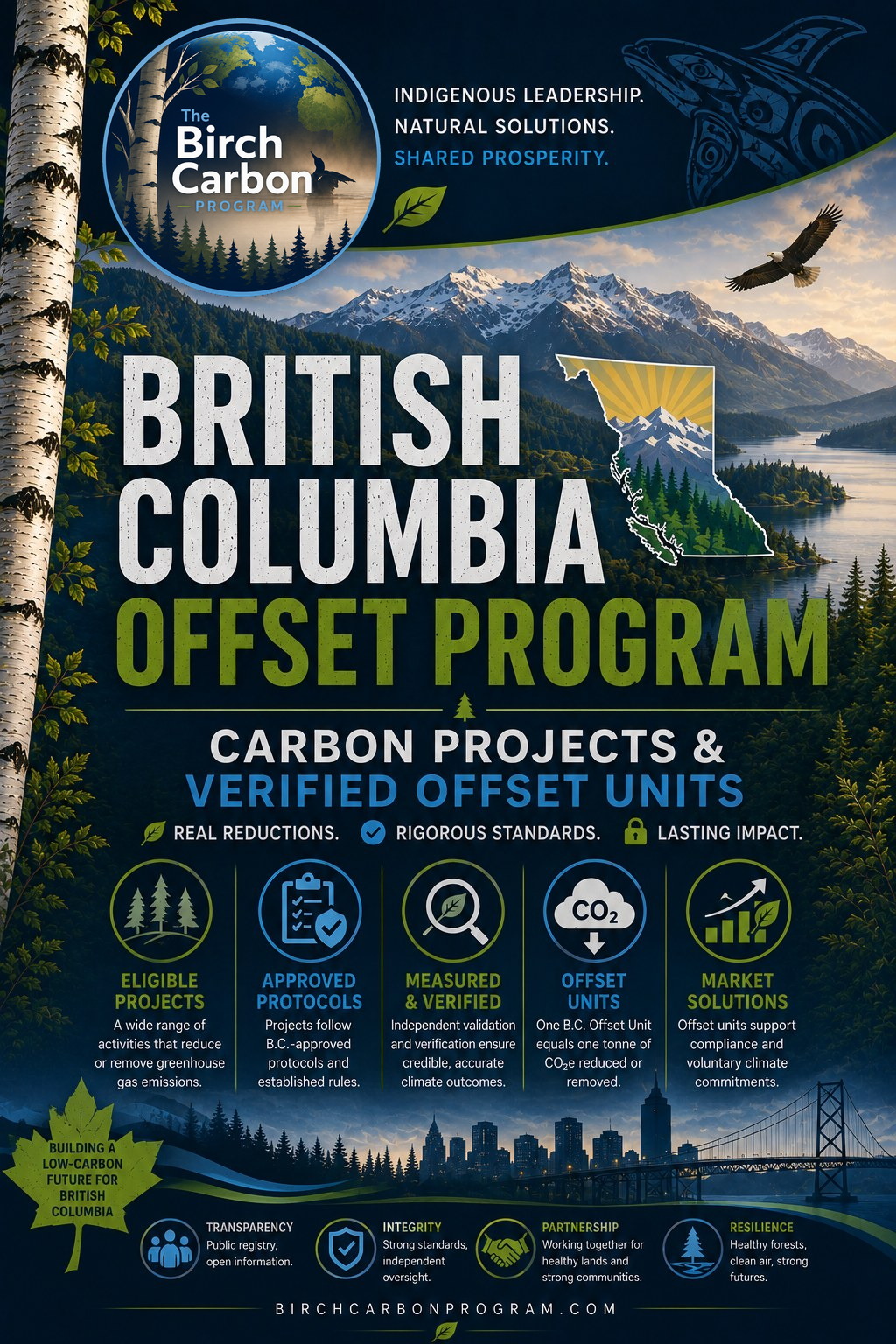
British Columbia Offset Program
Carbon Projects & Verified Offset Units
One B.C. Offset Unit is one verified tonne. This summary covers the route from project plan through validation, acceptance, monitoring and verification, plus the Province's dedicated forest carbon protocol and its policy on atmospheric benefits.
 18 pages
Québec Offset Credit System
Regulated Carbon Market & Carbon Credits
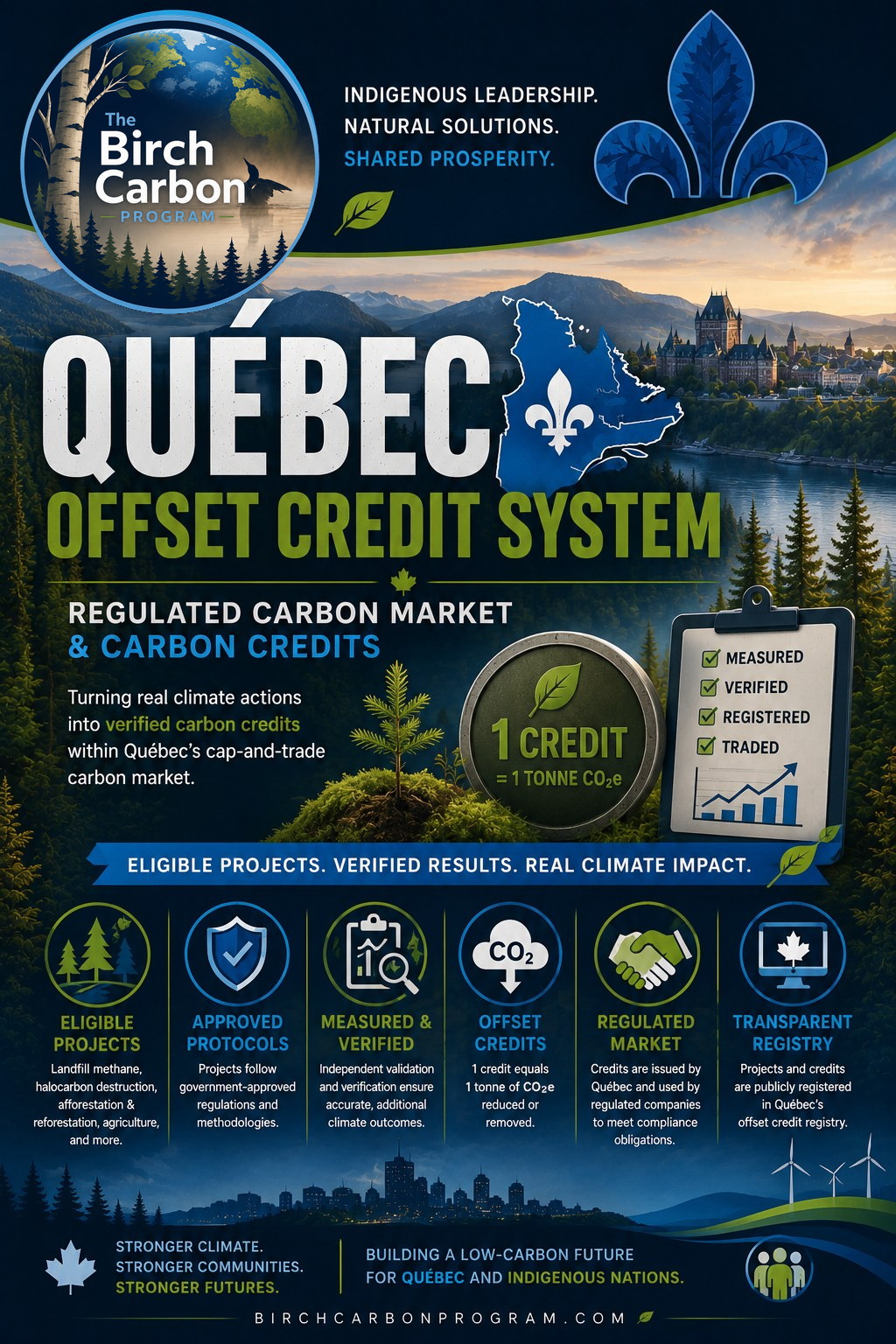
Québec's cap-and-trade system has issued more than 2.3 million offset credits since 2014. Its listed land-based pathway is afforestation and reforestation on privately owned land, which is not the same as crediting an existing standing forest.
Funding & Finance
Grants, funds and conservation finance that can pay for stewardship alongside carbon.
 18 pages
Indigenous Climate & Environmental Funding
Federal Funding Pathways for Nation-Led Environmental Work
Canada publishes a directory of federal programs that can fund Indigenous climate and environmental work. This summary explains what the directory covers, how it can be filtered, and why these programs sit alongside carbon revenue rather than replacing it.
 18 pages
Nature Smart Climate Solutions Fund
Canada's $1.4 Billion Natural Climate Fund
A ten-year, $1.4 billion federal fund for conserving, restoring and better managing carbon-rich ecosystems, targeting 5 to 7 megatonnes of annual reductions by 2030. The Indigenous-led stream sits inside it.
 18 pages
Indigenous-Led Natural Climate Solutions
A Federal Program for Nation-Led Projects
Up to $76.9 million set aside within the Nature Smart Climate Solutions Fund for Nation-led conservation, restoration and improved management. It funds the groundwork a credible carbon project needs first: inventories, monitoring, planning and technical capacity.
 18 pages
Finance for Forests
Conservation Finance for First Nations
Coast Funds lays out the financing options that can pay for conservation: trusts, endowments, project finance for permanence, payments for ecosystem services and carbon credits. Its key finding is that no single mechanism covers everything, and that the highest-paying option is not automatically the right one.
Indigenous Stewardship
Nationhood, Guardians, protected areas and the capacity that carries a project.
 18 pages
IPCA Knowledge Basket
Indigenous-Led Conservation & Stewardship
A free Indigenous-led platform gathering the experience of Nations already doing this work: IPCAs, governance, Indigenous laws, conservation financing, Guardians, planning and nature-based climate solutions. Organized by theme so a Nation can go straight to where it currently stands.
 18 pages
Indigenous Leadership Initiative
Nationhood & Stewardship
Guardians programs grew from roughly 30 in 2016 to more than 200 in 2024. This summary covers why that matters for carbon: the knowledge Guardians gather is what gives a Nation the data and the authority to decide what happens on its territory.
 18 pages
Cultivating Capacity
Indigenous-Led Nature-Based Solutions
A scan of what Nations actually need to advance nature-based solutions: knowledge, funding, people, data, alliances and vision alignment. Includes the report's discussion of carbon rights and jurisdiction, and why data sovereignty belongs in the conversation.
Forests & Natural Assets
Real Canadian projects where forest stewardship became carbon finance.
 18 pages
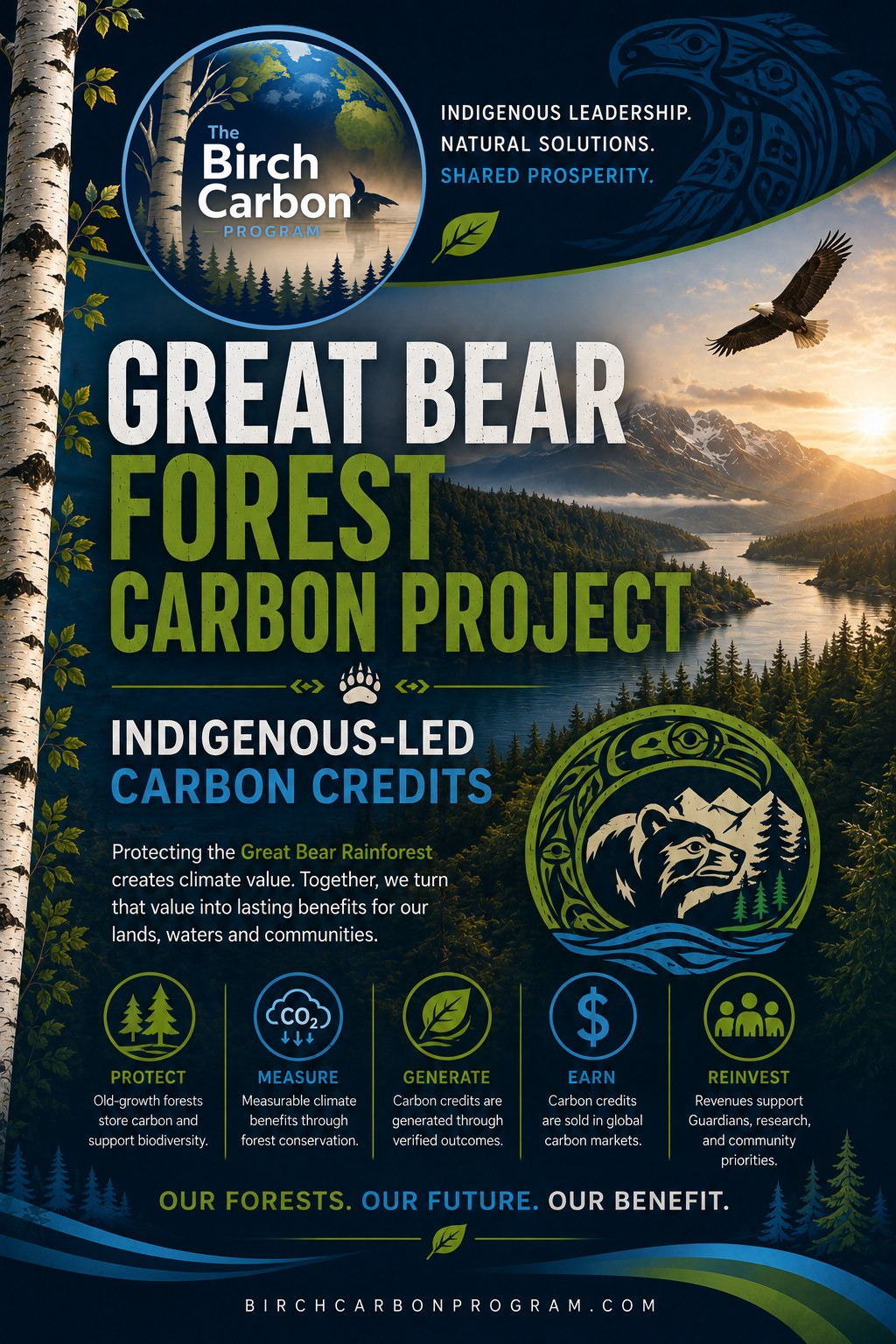
Great Bear Forest Carbon Project
Indigenous-Led Carbon Credits
The Canadian example that proves the model. Atmospheric Benefit Sharing Agreements gave participating Nations the right to own and sell offsets in their territories, and the project led to Great Bear Carbon, a wholly Indigenous-owned entity. Read for the structure, not as a template to copy.
 18 pages
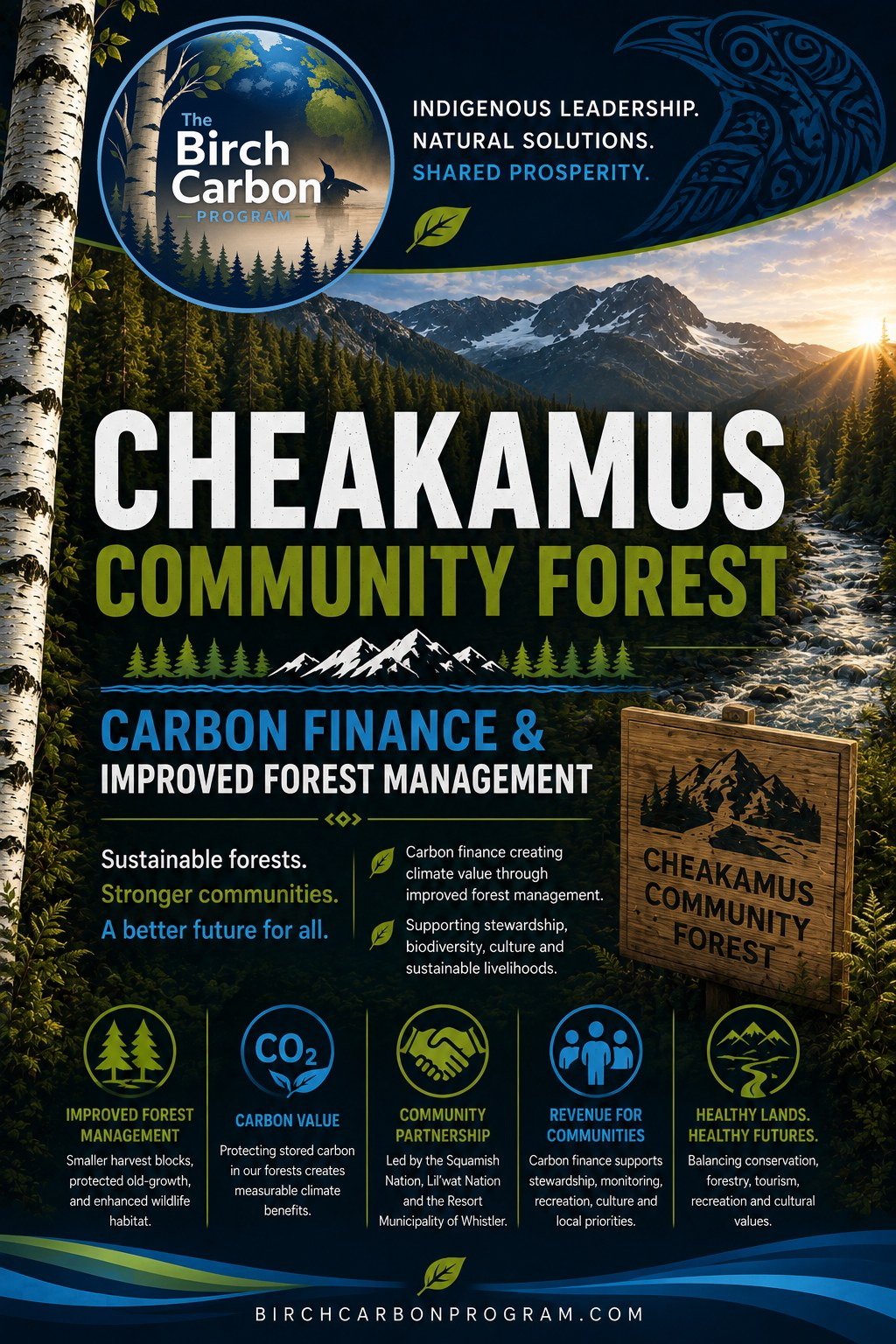
Cheakamus Community Forest
Carbon Finance & Improved Forest Management
A 33,018-hectare community forest around Whistler, co-governed by the Squamish and Lil'wat Nations. Harvest was cut by half and carbon revenue paid for the difference. The first carbon offset project on a Community Forest tenure in Canada.
Nineteen titles and growing. Every summary links back to the publication it came from, so nothing here replaces the original. Birch Carbon Program summaries are educational companions to the original publications, and nothing here is legal, financial, or technical advice.
Translated Toolkits
In our language.
The Government of Canada has translated the Greenhouse Gas Offset Toolkit factsheets into four Indigenous languages. Each cover opens that language’s section on Canada.ca, where all five factsheets are available to download.